

Best Vapes for Beginners 2026 — Simple Guide to Your First Device
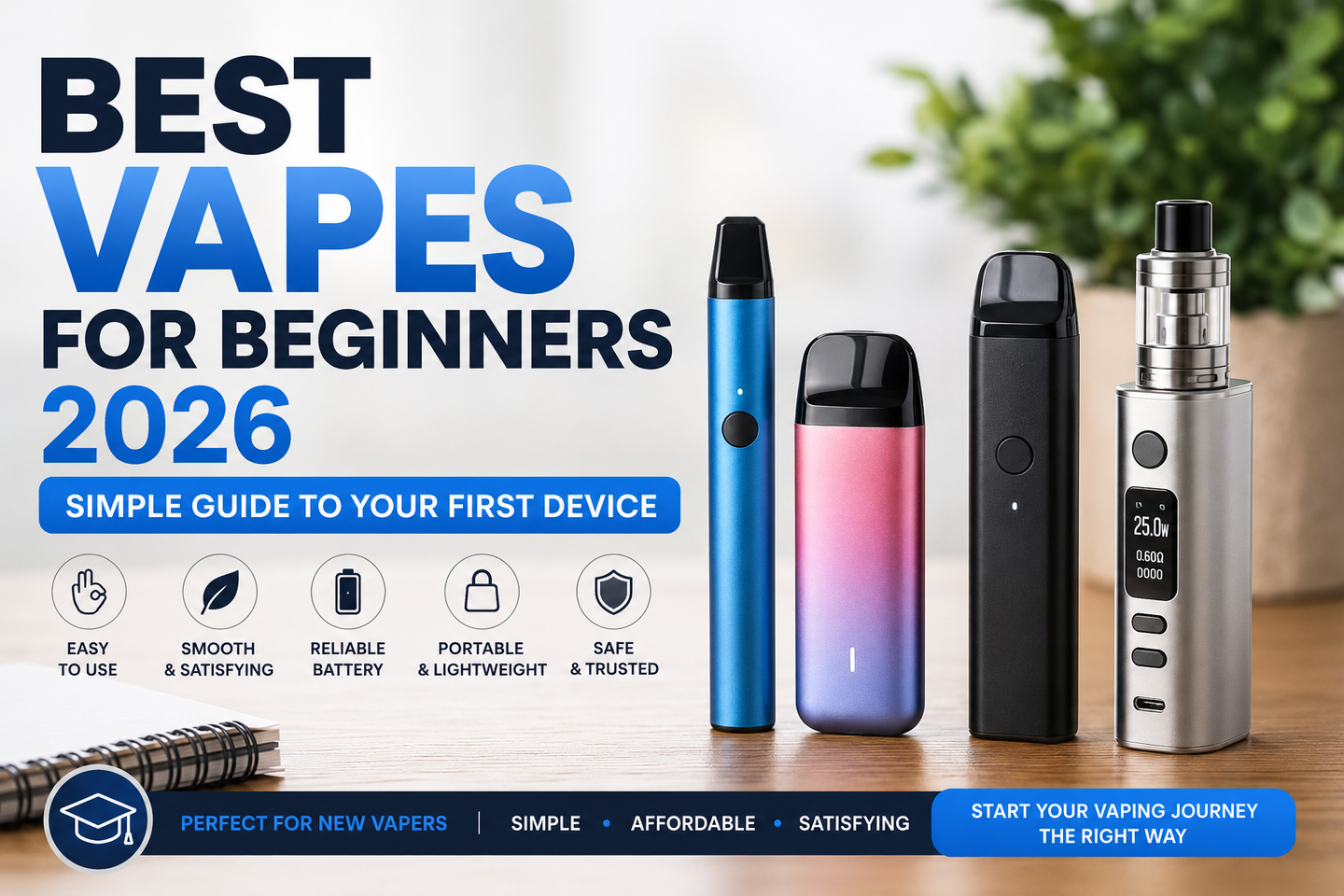
Best Vapes for Beginners 2026 Simple Guide to Your First Device
Walking into vaping for the first time can feel overwhelming — there are dozens of device types, conflicting opinions online, and a wall of unfamiliar terms. The truth is, picking a first device doesn't need to be complicated. Most beginners do best with one of two simple categories, and the right choice mostly comes down to a couple of personal preferences.
This guide breaks it down in plain language: what actually matters, what doesn't, and how to land on a device you'll actually be happy with.
Pick Your Device Type
Almost every beginner-friendly device falls into one of two categories. Here's the difference in plain terms:
Pod Systems (Recommended Starting Point)
Small, simple, and low-maintenance. You insert a pre-filled or refillable pod, and the device handles the rest — no settings to adjust, no coils to build. Draw feels similar to a cigarette (mouth-to-lung), which is part of why most people switching from smoking start here.
Sub-Ohm Tanks / Vape Mods
Bigger devices with adjustable airflow and power output, larger tanks, and a looser, airier draw. These produce bigger clouds and more flavor, but come with more to learn — coil changes, wattage settings, and e-liquid that's specifically formulated for sub-ohm use.
If you want something that works straight out of the box with almost no learning curve, start with a pod system. If you're drawn to bigger vapor production and don't mind a slightly steeper learning curve, a starter-friendly sub-ohm kit is worth considering.
Choose Your Nicotine Strength
This is where a lot of beginners either overshoot (too harsh, puts them off vaping entirely) or undershoot (not satisfying, so they go back to smoking). Nicotine strength is usually listed in milligrams per milliliter (mg/mL).
| Background | Suggested starting range |
|---|---|
| Light or social smoker | 3–6 mg/mL |
| Average smoker (about a pack a week) | 6–12 mg/mL |
| Heavy smoker (a pack a day or more) | 12–20 mg/mL (often as nic salts) |
| Never smoked, just curious | Consider starting at 0 mg/mL |
Two formats matter here: freebase nicotine, which feels smoother at lower strengths and pairs well with sub-ohm tanks, and nicotine salts, which deliver nicotine more efficiently and are the standard for most pod systems at higher strengths.
Decide Between Disposable and Refillable
Disposables are the lowest-effort entry point — no filling, no charging, just use and discard. They're a reasonable way to figure out what flavors and strengths you like before committing to anything. Refillable pod systems cost a little more upfront but work out cheaper per month, since you're only buying e-liquid and the occasional replacement pod rather than a whole new device.
A common path: start with one or two disposables to get a feel for things, then move to a refillable pod system once you know roughly what you like.
Features That Actually Matter for Beginners
- Battery life — look for at least 400–500mAh if you vape regularly throughout the day; smaller batteries mean more frequent charging.
- Pod or coil availability — pick a device with pods or coils that are easy to find locally or online, so you're not stuck when you run out.
- Draw-activated firing — most beginner pod systems fire automatically when you inhale, with no button to press. This is the simplest option and worth prioritizing.
- Leak resistance — some pod designs are noticeably better sealed than others; if you're prone to losing things in a bag, this matters more than it sounds.
What you generally don't need as a beginner: adjustable wattage, temperature control, custom coil builds, or a screen full of settings. Those features matter more once you've figured out your preferences.
Common First-Timer Mistakes to Avoid
- Starting at too high a nicotine strength — harshness in the throat is usually a sign to size down, not a sign you need a stronger device.
- Buying based on cloud size alone — bigger clouds usually mean a steeper learning curve and aren't necessary for satisfaction.
- Ignoring pod/coil availability — a great device is no good if you can't find replacement parts for it.
- Not trying more than one flavor — preferences vary a lot from person to person; one disappointing flavor doesn't mean vaping "isn't for you."
Quick FAQ
Do I need to charge it before first use?
Most devices ship with a partial charge, but it's worth giving any new device a full charge before your first session.
How long should a pod or coil last?
Typically one to two weeks with regular use, though this varies by how often you vape and which e-liquid you use.
Is a stronger device always better?
No — for most beginners, simplicity and consistency matter far more than raw power or cloud size.
Ready to find your first device?
Browse our beginner-friendly pod systems and starter kits.
Shop Starter KitsExplore Popular Articles
Lost Mary VIZ 55K vs Nera 70K: Which New Lost Mary Is Better in 2026?
Lost Mary continues to push high-capacity vape technology with newer designs that focus on longer r...
Geek Bar Pulse 2 vs Pulse X (2026): Which 25K Vape Is Better?
The Geek Bar Pulse 2 and Geek Bar Pulse X are two high-capacity devices designed for adult consumer...

Geek Bar Burj 80K Review (2026): Is This the Ultimate High-Capacity Hookah Vape?
The Geek Bar Burj 80K takes the familiar disposable vape concept and moves it into a completely dif...
The Ultimate Mr Fog Buyer's Guide 2026: Every Model Compared
⚠ WARNING: Nicotine products contain an addictive chemical. Adults 21+ only. The Ultimate Mr Fog...